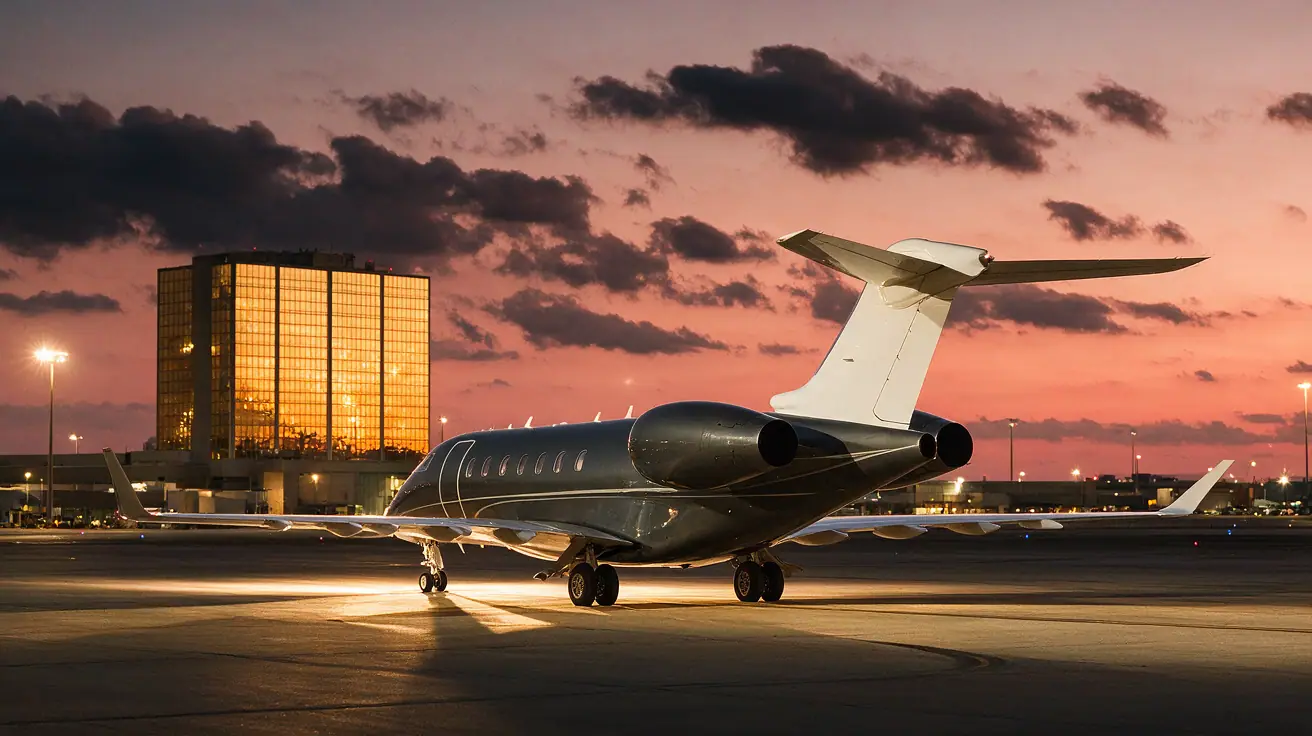
Private jet for charter on US trips
A private jet for charter covers most US legs, from short hops to cross-country flights. Midsize jets seat seven to nine passengers, while the light jet class suits shorter routes. Charter prices are estimates until an operator confirms.
- 26routes priced
- 20airports
- $2,200lowest price per hour
- 2h 37mNew York to Miami, light jet
Pricing calculator
Choose a route, passenger count and bags to see the class that fits, the flight time and a price range.
- Charter staff pick up the phone 24/7
- Trips flown only by FAA Part 135 operators
- An all-in quote before you commit

Airports and FBOs for charter flights
Teterboro Airport (KTEB) has a 6,997-foot runway and four FBOs, but its peak density altitude reaches 2,300 feet in the hottest month plus 8 F. Van Nuys Airport (KVNY) offers an 8,001-foot runway and peak density altitude of 3,800 feet. For a complete list, see the airport entries below.
Teterboro Airport
- KTEB type
- 6,997 ft rwy length
Teterboro Airport (KTEB) sits 9 feet above sea level with a 6,997-foot main runway and four FBOs: Jet Aviation, Signature Aviation East, Atlantic Aviation and Signature Aviation West. Peak density altitude reaches 2,300 feet, computed from the hottest month's average high plus 8 F. In July, density altitude is 1,700 feet. If you fly a light jet on a hot July afternoon, then expect reduced climb performance and a longer takeoff roll. The airport has no commercial terminal; all charter flights use the FBOs.

Van Nuys Airport
- KVNY type
- 8,001 ft rwy length

Miami-Opa Locka Executive Airport
- KOPF type
- 8,002 ft rwy length
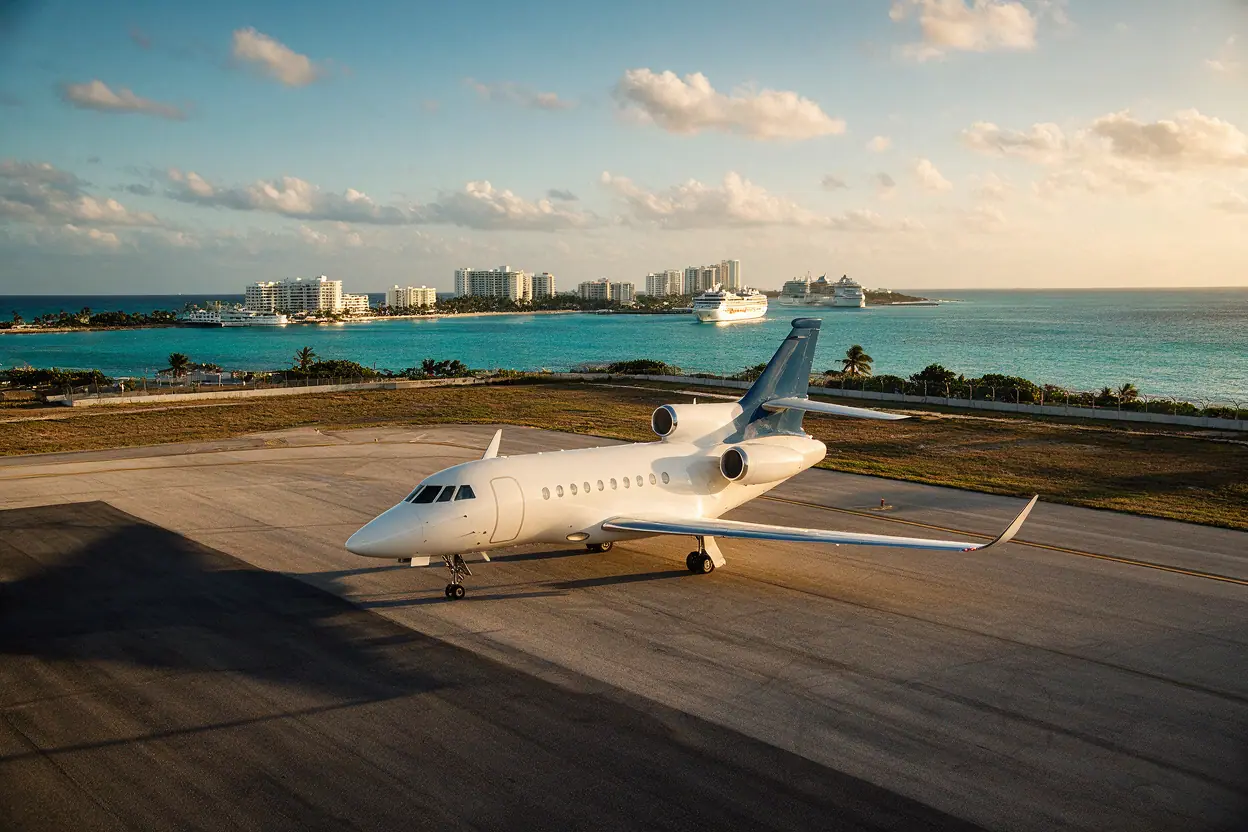
Miami-Opa Locka Executive Airport (KOPF) is 8 feet above sea level with an 8,002-foot runway. Atlantic Aviation, Signature Aviation, Jet Aviation and Fontainebleau Aviation operate FBOs there. Peak density altitude reaches 2,500 feet, from the hottest month's average high plus 8 F; July density altitude is 1,900 feet. If your trip continues to the Bahamas, then the leg is international. The airport handles both domestic and international charter flights.

Chicago Midway International Airport
- KMDW type
- 6,522 ft rwy length

Dallas Love Field
- KDAL type
- 8,800 ft rwy length
Dallas Love Field (KDAL) is 487 feet above sea level with an 8,800-foot runway. FBOs include Atlantic Aviation, Jet Aviation, Signature Aviation (Terminal 1 at A2) and Jet Access Dallas. Peak density altitude reaches 3,500 feet, from the hottest month's average high plus 8 F; July density altitude is 3,000 feet. If your trip is to Houston, then the 208-nautical-mile leg takes about 48 minutes in a light jet. Dallas Love Field serves the Dallas area.

William P. Hobby Airport
- KHOU type
- 7,602 ft rwy length
William P. Hobby Airport (KHOU) sits 46 feet above sea level with a 7,602-foot runway. Six FBOs serve charter flights: Wilson Air Center, Million Air Houston, Jet Aviation Houston, Atlantic Aviation, Signature Aviation and Henriksen Jet Center. Peak density altitude reaches 2,700 feet based on the hottest month's average high plus 8 F; July density altitude is 2,200 feet. If your light jet departs Houston in August, then expect high humidity and density altitude near the peak of 2,700 feet. The airport serves the Houston area.

How to book a private jet charter
Request a quote
Send your route, dates, passenger count and baggage needs to a broker. The broker checks availability with FAA Part 135 operators and returns a written quote.
Review the quote
The quote lists the aircraft type, operator, flight charge, federal excise tax, segment fees and any positioning charges. Ask about insurance and crew gratuity.
Confirm and sign
Once you accept, the broker confirms the aircraft and crew with the operator. You may need to provide passenger names and identification.
Fly
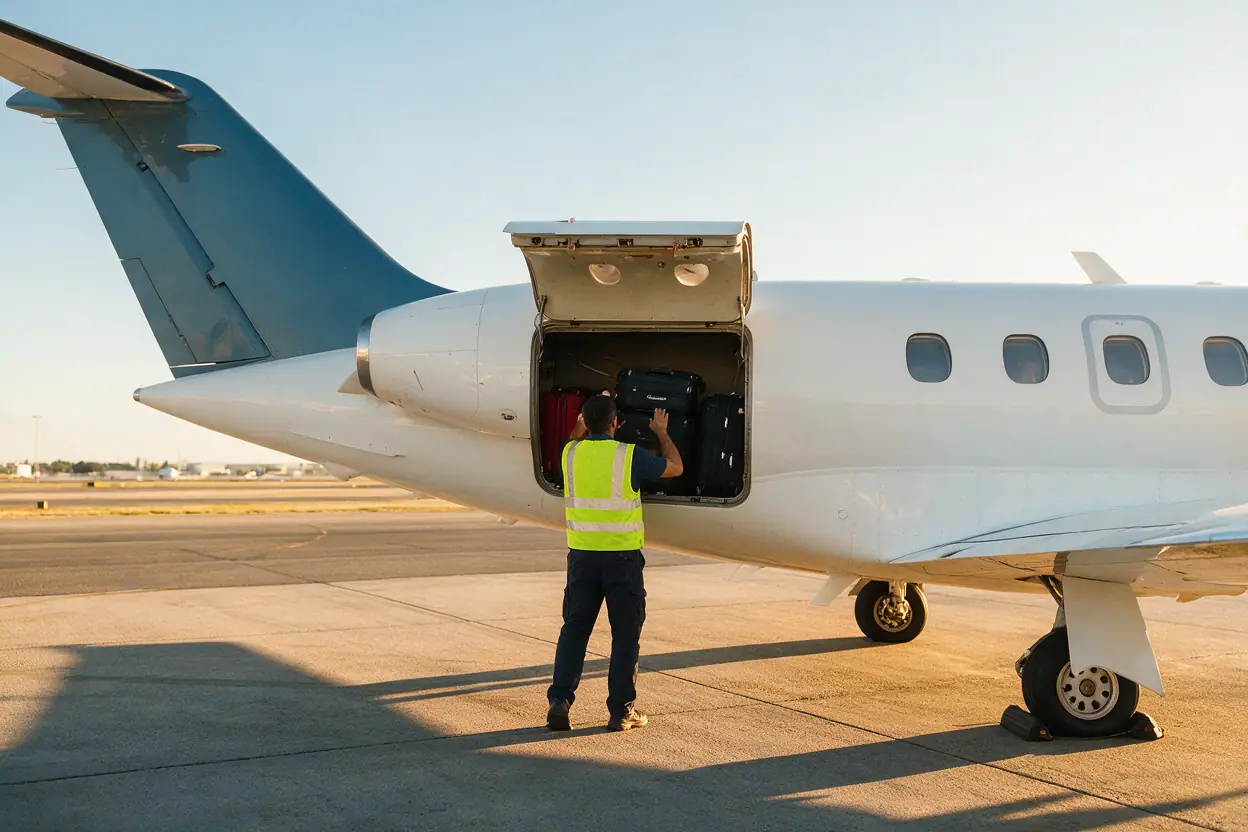
The crew handles baggage and boarding.

How to book a private jet for charter
Booking a private jet for charter starts with a request to a broker, who returns a written quote. The quote lists the aircraft type, operator, flight charge, federal excise tax and segment fees. The FAA Part 135 Operators and Aircraft list shows 1,686 certificate holders operating 10,894 aircraft as of Mar 25, 2026 (source: FAA). That list is the first place to check an operator's certificate when comparing quotes.
If you need a jet on short notice, then a broker can often confirm availability from operators with aircraft positioned nearby. Last-minute charter requests work best when you can be flexible on the airport or departure time. The quote is an estimate until an operator confirms the aircraft and crew. Ask the operator to confirm its insurance certificate. Comparing quotes from two or three operators gives you a sense of the market for your route.
| Line on the quote | How it is worked out | Estimate |
|---|---|---|
| Flight charge | Light jet, 2h 37m at $3,800–$5,800 per hour | $10,000–$15,000 |
| Federal excise tax | 7.5% of the flight charge on domestic legs | $750–$1,125 |
| Segment fee | 4 passengers at $5.30 per domestic segment | $21.20 |
| Estimated total | New York to Miami, one way | $10,771–$16,146 |
Source: FAA, Trust Fund Excise Taxes Structure, rates effective January 1, 2026. Airport, de-icing, catering and crew overnight charges are added only when the trip needs them.

When weather slows charter flights
Miami records 11.9 inches of rain in June, its wettest month, while Los Angeles is driest with 0 inches in June, according to PRISM / NOAA Regional Climate Centers data for 2016 to 2025. New York, Chicago and Washington, DC all see freezing average lows in January, February and December, which can mean de-icing delays for charter flights. If you fly into Chicago in January, then de-icing is likely and may add time before departure. The table below shows the wettest month, driest month, annual precipitation and months with freezing average lows for eight cities.
If your trip is to Miami in June, then afternoon thunderstorms can cause ground stops and reroutes. Los Angeles has no months with freezing average lows, so winter travel there rarely involves de-icing. Dallas has 5.8 inches of rain in May, its wettest month, while July is driest at 1.9 inches. Planning around the wettest months reduces the chance of weather delays on your charter flight. Denver to Aspen is a short 96-nautical-mile hop, but winter storms can close mountain airports.
| City | Wettest month | Driest month | Precipitation per year | Months with freezing average lows |
|---|---|---|---|---|
| New York | Jul (5.7 in) | Nov (3 in) | 51.2 in | Jan, Feb, Dec |
| Los Angeles | Feb (3.5 in) | Jun (0 in) | 16 in | none |
| Miami | Jun (11.9 in) | Mar (1.8 in) | 77.6 in | none |
| Chicago | Jul (5.6 in) | Nov (2 in) | 41.4 in | Jan, Feb, Dec |
| Dallas | May (5.8 in) | Jul (1.9 in) | 44.5 in | none |
| Houston | Aug (8.3 in) | Feb (2.7 in) | 58.6 in | none |
| Atlanta | Aug (6.2 in) | Oct (3.1 in) | 56.6 in | none |
| Washington, DC | May (5.3 in) | Mar (2.4 in) | 42.4 in | Jan, Feb, Dec |
Source: PRISM monthly climate data via NOAA Regional Climate Centers (ACIS), monthly averages 2016 to 2025, at each city's main business airport.
Private jet for charter guides
The guides cover how to charter a private jet, reading a quote, on-demand charter versus a jet card, last-minute charter and international flights. Each guide explains the decisions in plain terms so you can compare options for your trip.
How to charter a private jet
How to charter a private jet in 2026: the stages of booking, with real costs and 1,686 FAA Part 135 certificate holders behind them.
Reading a charter quote
Private jet charter quote for 2026, line by line: flight charge, 7.5% federal excise tax, the $5.30 segment fee, and which figures are fixed.
On-demand charter vs a jet card
On demand private jet charter vs jet card: compare pay-per-trip with prepaid hour blocks, hourly rates, and 2026 sample trip prices.
Last-minute charter
Last-minute private jet charter within 24 to 48 hours: what changes in aircraft availability, repositioning and price, with hourly rate ranges by class.
International charter flights
International jet charter guide for 2026: what a customs stop, permits, range and the $23.40 per passenger international tax add to a private flight quote.
By city





What a private jet charter costs
A light jet charter from New York to Miami totals $10,771 to $16,146 one way, including federal excise tax and segment fees. The table below shows the lines: a flight charge of $10,000 to $15,000 for 2 hours 37 minutes at $3,800 to $5,800 per hour, federal excise tax at 7.5% of the flight charge ($750 to $1,125), and a segment fee of $5.30 per passenger per domestic segment ($21.20 for four passengers). The estimate includes only the flight charge, federal excise tax and segment fee. Airport fees, de-icing, catering and crew overnight charges are extra when the trip needs them.
Ask the operator whether positioning charges apply. Crew gratuity is not included in the quote. Comparing quotes from more than one operator surfaces differences in the flight charge and fees. The FAA Trust Fund Excise Taxes Structure sets the 7.5% rate effective January 1, 2026 (source: FAA). Prices are estimates until an operator confirms.
| Class | Pax | Hourly rate | New York → Miami |
|---|---|---|---|
| Turboprop | 6-8 | $2,200–$3,500 | $8,000–$12,500 |
| Light jet | 4-7 | $3,800–$5,800 | $10,000–$15,000 |
| Midsize jet | 7-9 | $5,200–$7,800 | $13,500–$20,000 |
| Super-midsize jet | 8-10 | $7,200–$10,000 | $17,500–$24,000 |
| Heavy jet | 10-14 | $9,500–$14,500 | $23,000–$35,000 |

Aircraft classes for charter
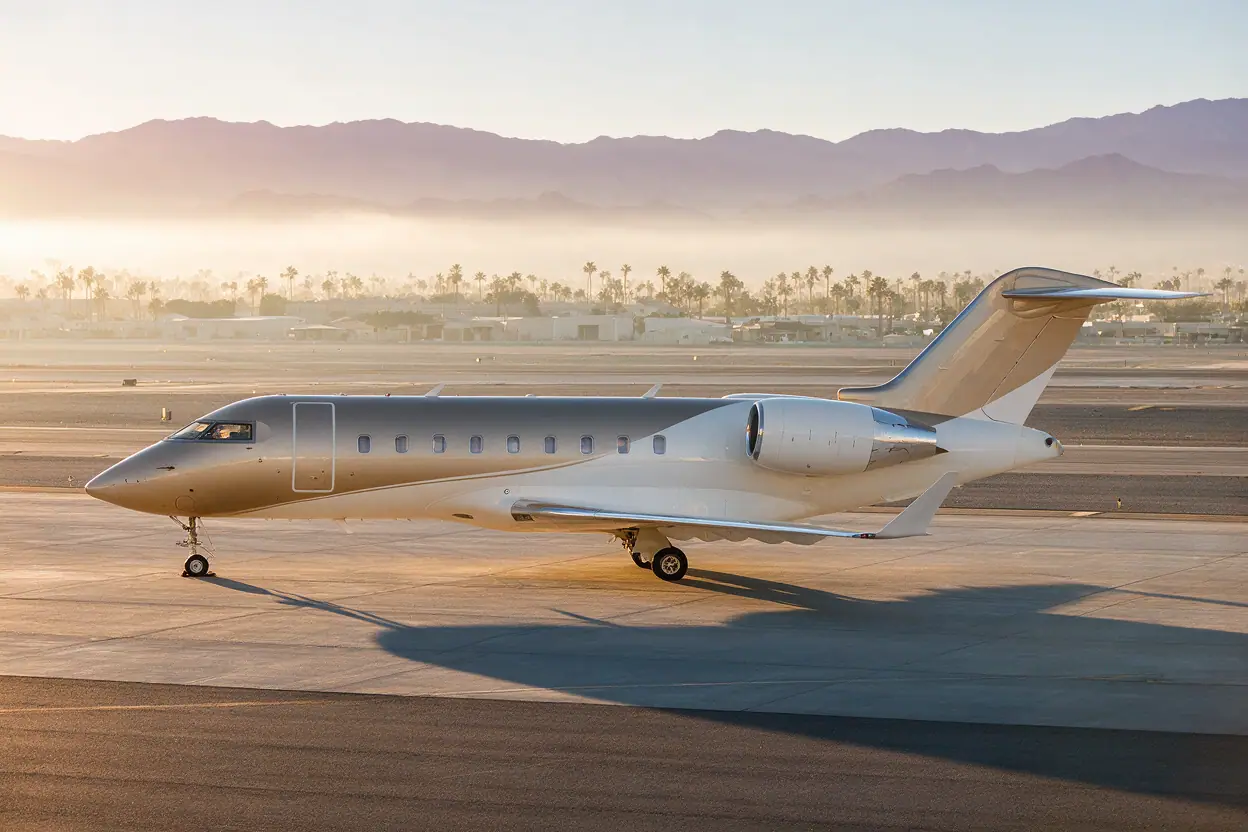
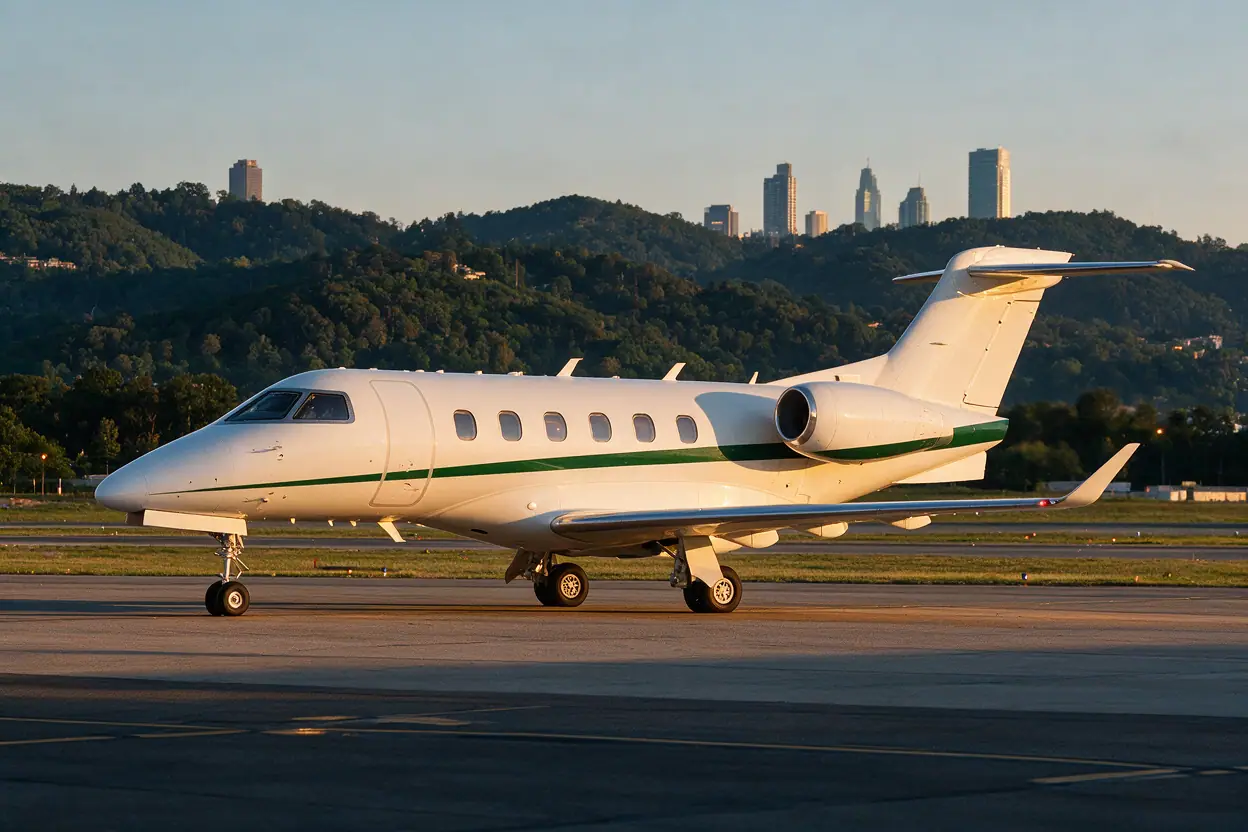
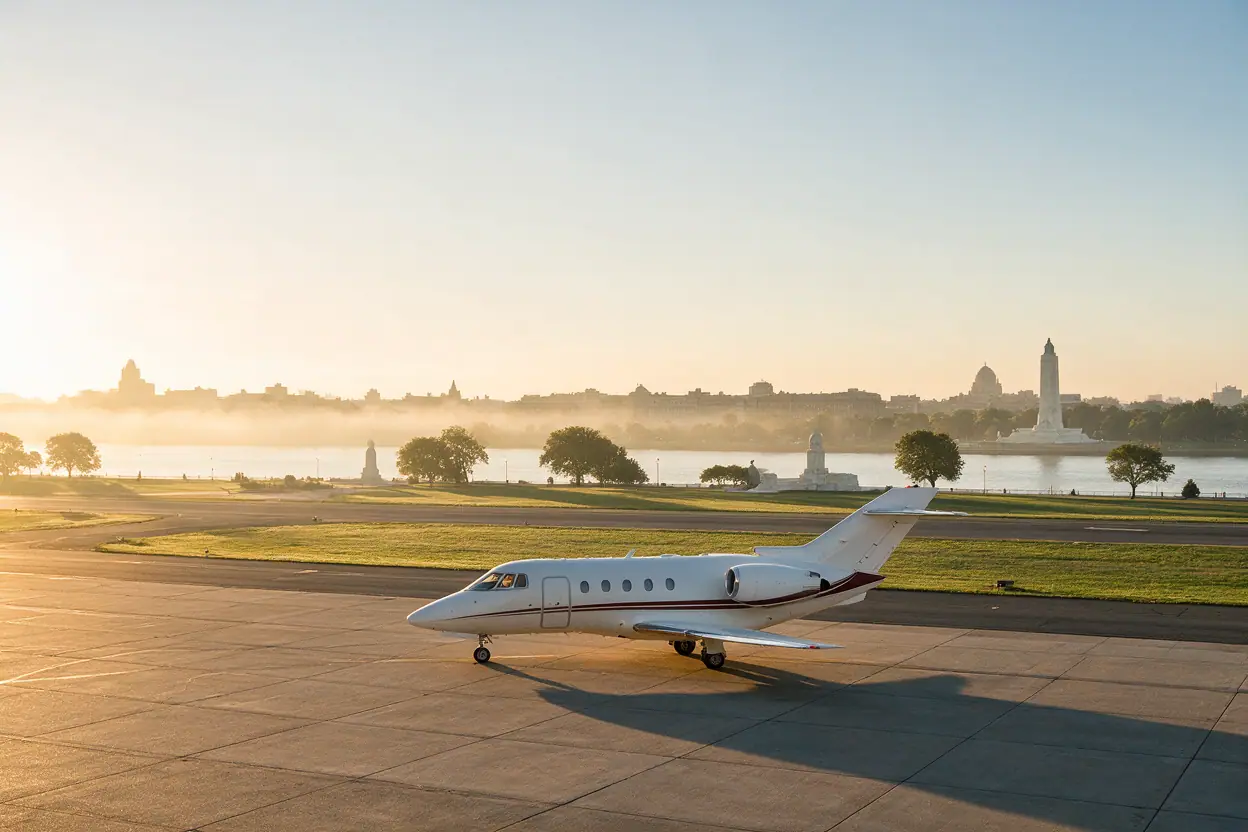
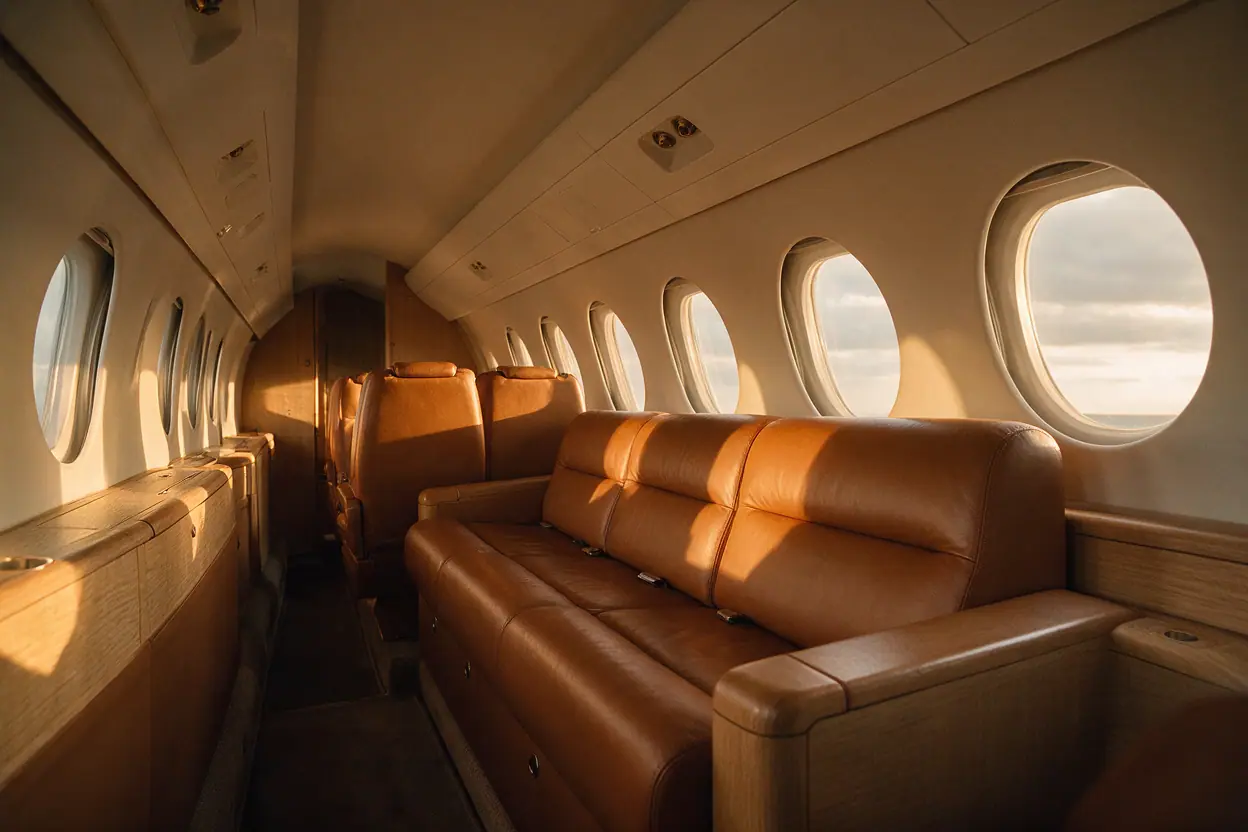
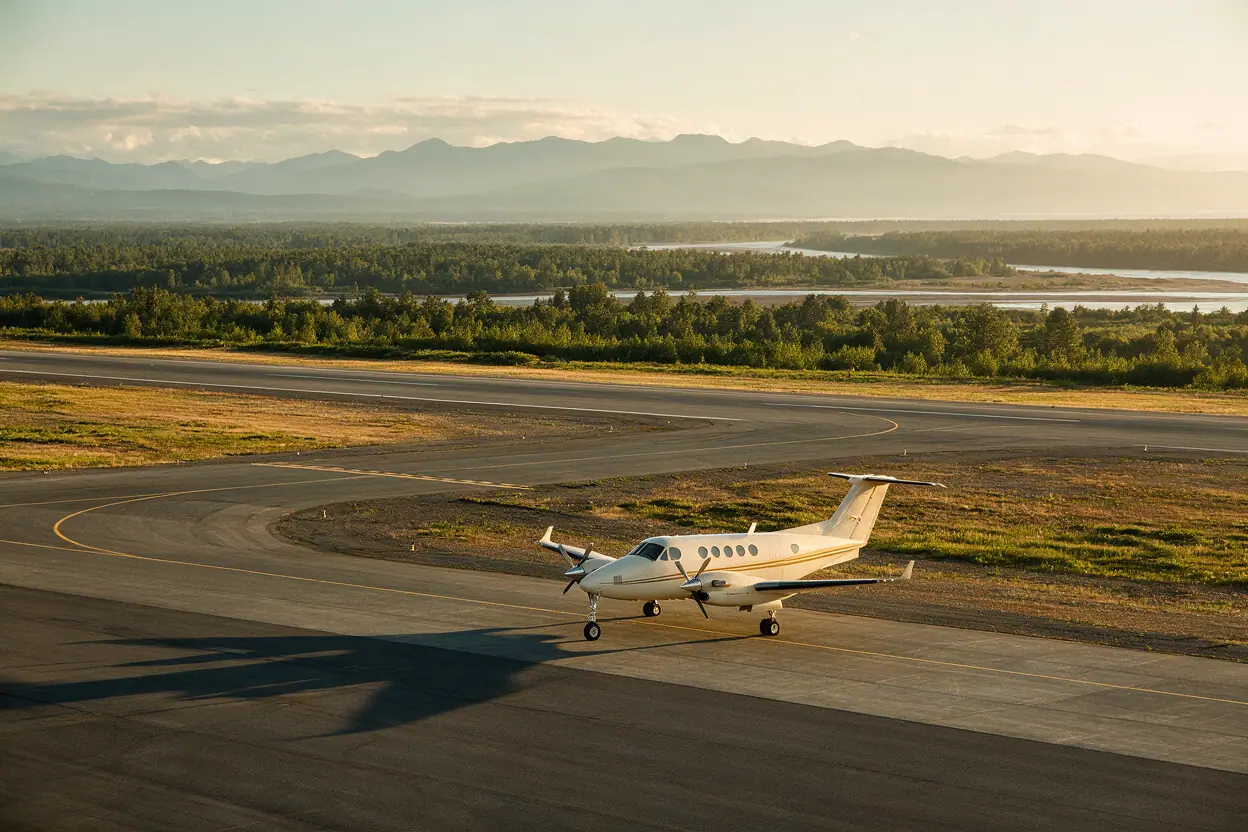
A turboprop carries 6 to 8 passengers at 300 knots for up to 1,500 nautical miles, with hourly rates from $2,200 to $3,500. A light jet seats 4 to 7 and cruises at 430 knots over 1,400 nautical miles, at $3,800 to $5,800 per hour. The turboprop class has the lowest hourly rates, from $2,200 to $3,500. Midsize jets seat 7 to 9 and fly 2,100 nautical miles at 440 knots, at $5,200 to $7,800 per hour. Super-midsize jets carry 8 to 10 over 3,200 nautical miles at 470 knots, at $7,200 to $10,000 per hour.
Heavy jets seat 10 to 14 and cover 4,000 nautical miles at 470 knots, at $9,500 to $14,500 per hour. Heavy jets fly up to 4,000 nautical miles at 470 knots. The Cessna Citation X+ is a super-midsize jet and the Embraer Phenom 300E is a light jet. Baggage volume varies by class; ask for the actual aircraft's baggage capacity when you request a quote. If your party exceeds 10 passengers, a heavy jet is required.
Turboprop
- 6-8 pax
- 300 kt cruise
- 1,500 nm legs
Beechcraft King Air 350i, Pilatus PC-12 NGX
Light jet
- 4-7 pax
- 430 kt cruise
- 1,400 nm legs
Embraer Phenom 300E, Pilatus PC-24

Midsize jet
- 7-9 pax
- 440 kt cruise
- 2,100 nm legs
Hawker 800XP, Cessna Citation XLS+

Super-midsize jet
- 8-10 pax
- 470 kt cruise
- 3,200 nm legs
Gulfstream G280, Cessna Citation X+

Heavy jet
- 10-14 pax
- 470 kt cruise
- 4,000 nm legs
Bombardier Challenger 650, Dassault Falcon 900LX

US-registered share of the fleet
18,165 business jets are on valid US registrations. The models you see most:
Data from the FAA aircraft registry, valid registrations only, as of Nov 2, 2026. Each model is tallied under its type-certificate family.
| Aircraft | US total |
|---|---|
| Bombardier Challenger 300/350 | 868 |
| Cessna Citation Excel/XLS | 733 |
| Cirrus Vision Jet | 702 |
| Embraer Phenom 300 | 660 |
| Cessna CitationJet/CJ1 | 652 |
| Gulfstream IV/G450 | 610 |

Private jet for charter routes and estimates
A private jet for charter on the New York to Miami route covers 949 nautical miles in a light jet at $10,000 to $15,000, or about 2 hours 37 minutes in the air. Mountain routes test performance: New York to Aspen is 1,503 nautical miles, which is beyond a light jet's 1,400-nautical-mile range, so a light jet needs a fuel stop; a midsize jet flies it nonstop in 3 hours 53 minutes at $20,000 to $30,500.
For a 2,129-nautical-mile leg like New York to Los Angeles, a super-midsize or heavy jet avoids the fuel stop and carries more baggage. A heavy jet flies New York to Los Angeles in a single hop and offers a stand-up cabin, but expect hourly rates from $9,500 to $14,500. Comparing a light jet and a super-midsize on the same route shows the trade-off in range and cabin comfort. Use the estimate ranges to compare classes before you request quotes; most routes price by the hour, and airports add their own fees.
- New York → Miami2h 37m · light jet
- New York → Los Angeles5h 03m · super-midsize jet
- Los Angeles → Las Vegas1h 00m · turboprop
- New York → Palm Beach2h 30m · light jet
- Los Angeles → San Francisco1h 17m · turboprop
- New York → Aspen3h 53m · midsize jet
- Los Angeles → Aspen1h 51m · light jet
- New York → The Hamptons0h 35m · turboprop
- Chicago → New York1h 49m · light jet
- Dallas → Houston1h 02m · turboprop
- Miami → Nassau0h 52m · turboprop
- New York → Boston0h 51m · turboprop
- Washington, DC → New York0h 59m · turboprop
- Los Angeles → Cabo San Lucas2h 16m · light jet
- Dallas → Las Vegas2h 34m · light jet
- Chicago → Miami2h 48m · light jet
- Atlanta → New York1h 52m · light jet
- New York → Las Vegas4h 37m · super-midsize jet
- San Francisco → Las Vegas1h 33m · turboprop
- Denver → Aspen0h 38m · turboprop
- Houston → New York3h 15m · midsize jet
- Dallas → New York3h 09m · midsize jet
- Los Angeles → Honolulu5h 15m · super-midsize jet
- Seattle → Los Angeles2h 18m · light jet
- Phoenix → Los Angeles1h 25m · turboprop
- Boston → Palm Beach2h 51m · light jet
How these estimates are worked out
The estimates on this page are computed from great-circle distance plus a 5% routing allowance, flown at each class's cruise speed, plus 0.3 hours for taxi, climb and descent. That block time is then billed at the class hourly range with a one-hour minimum. Hourly ranges come from public charter market data and operator published rates; they are not quotes. Sources include the FAA Trust Fund Excise Taxes Structure (rates effective January 1, 2026), the FAA Part 135 Operators and Aircraft list (Mar 25, 2026) and PRISM / NOAA Regional Climate Centers monthly climate data (2016 to 2025).
This site arranges charter as a broker; every flight is flown by an FAA Part 135 certificated operator. Prices are estimates until an operator confirms.
Questions we get
How much does it cost to charter a private jet in the USA?
A light jet from New York to Miami costs $10,000 to $15,000 for 2 hours 37 minutes, or $10,771 to $16,146 including federal excise tax and segment fees. Hourly rates range from $2,200 to $3,500 for a turboprop up to $9,500 to $14,500 for a heavy jet. Prices are estimates until an operator confirms.
How much do private jet brokers get paid?
Brokers typically earn a commission from the operator, built into the quoted price, or charge a flat fee; the quote you receive should state the total. When comparing quotes, ask whether any broker fee is included. The flight charge, taxes and fees should be itemized. Ask for the breakdown in writing before you confirm.
Can I book a private jet for charter for a large group?
A VIP airliner conversion is arranged per trip; pricing depends on the operator, configuration and route and is not in our dataset. Request a quote with the passenger count and route, and confirm the operator's certificate and insurance before booking.
Is a tip for the crew included in the quote?
Gratuity is at your discretion and is not included in the quote. Ask the broker whether the operator has a suggested policy. The crew's compensation is separate from the charter price.
How do I look up an operator on the FAA Part 135 list?
The FAA Part 135 Operators and Aircraft list is published by the FAA and shows certificate holders and their aircraft. As of Mar 25, 2026, it listed 1,686 certificate holders and 10,894 aircraft. Search the operator's name or certificate number. If the operator is not listed, then ask the broker for an alternative.
What is an empty leg and can I book one?
An empty leg is a flight where the aircraft must reposition without passengers; the operator may sell that leg at a reduced price. Availability is limited and changes quickly. If you can be flexible on date and time, then an empty leg can reduce the cost. Ask the broker to check empty leg options for your route.