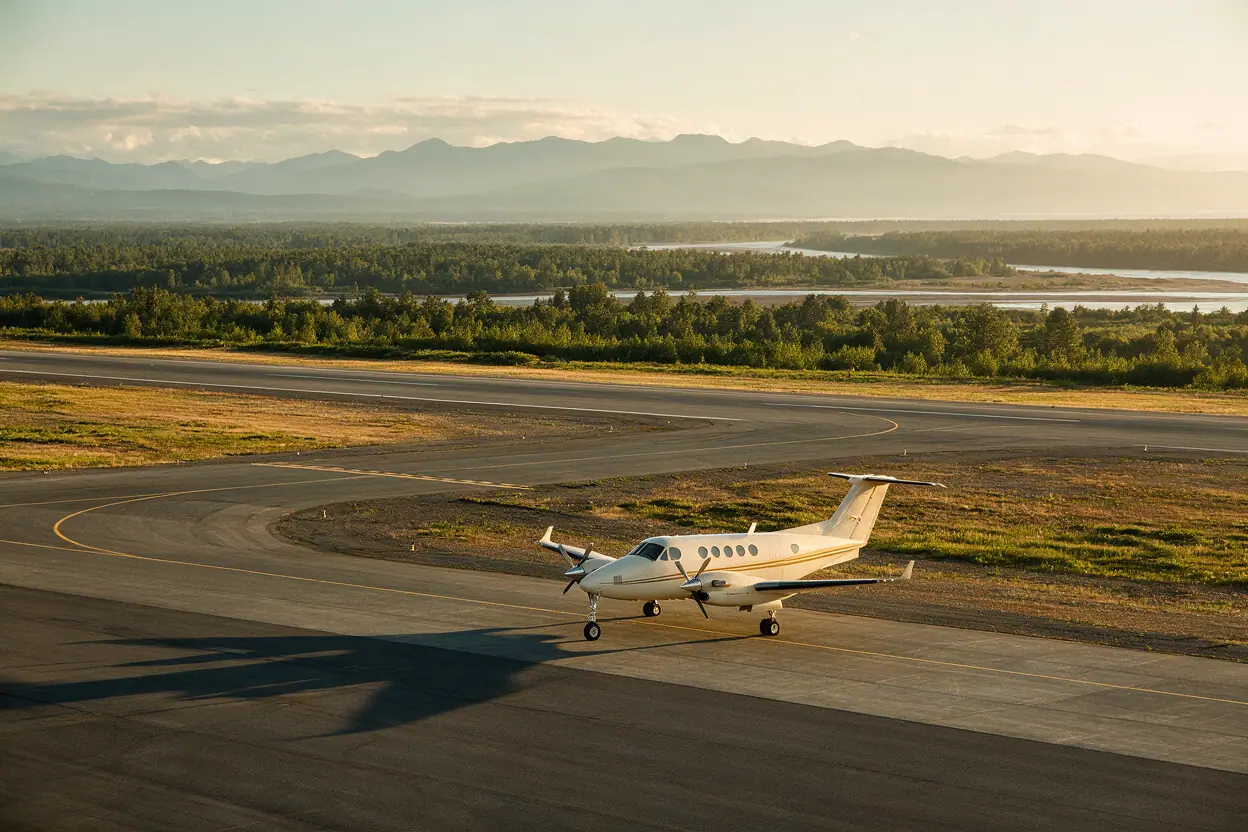
Turboprop for charter
A turboprop for charter sits between piston twins and light jets on cost and speed. Expect $2,200 to $3,500 per hour and roughly 300 knots cruise on most US trips. This page covers the aircraft, the routes they handle well, and the questions that change a quote.
- $2,200–$3,500by the flight hour
- 6-8seats filled
- 1,500 nmnormal range

A turboprop for charter is a propeller-driven turbine aircraft flown by a crew, priced by the flight hour rather than the seat. The two airframes brokers quote most often in the US are the Beechcraft King Air 350i and the Pilatus PC-12 NGX. The King Air 350i seats eight at 312 knots with 1,800 nm of range, which covers most East Coast city pairs nonstop. The PC-12 NGX carries six at 290 knots, also 1,800 nm, and is often the better choice when the runway is short or the field is a smaller regional airport.
Quotes usually bundle the aircraft, crew, fuel, and standard catering into an hourly rate, with landing fees and hangar charges passed through. A turboprop for charter typically cruises near 300 knots with 1,500 nm of usable range, so a trip like New York to Miami at 949 nm comes in around 3 hours 37 minutes nonstop. Ask what the quote excludes: de-icing in winter, crew overnight, and ground transportation are common line items that get added after the fact.
Beechcraft King Air 350i
- 8 pax
- 312 kt cruise
- 1,800 nm legs
- 55 cu ft luggage
- 748 US registration
The King Air 350i is the workhorse of the US turboprop charter fleet. Eight seats, a cabin 4 ft 9 in tall and 16 ft 8 in long, and 55 cubic feet of baggage. Cruise is 312 knots with 1,800 nm of range, which covers New York to Miami nonstop in about 3 hours 37 minutes. The cabin is pressurized and quiet enough for calls, and the aircraft handles short runways well. Ask the operator about the baggage bay door and any seat configuration changes before you book a full load.
Pilatus PC-12 NGX
- 6 pax
- 290 kt cruise
- 1,800 nm legs
- 40 cu ft luggage
- 1,426 US registration
The PC-12 NGX is a single-engine turboprop that seats six in a cabin 4 ft 10 in tall and 16 ft 11 in long, with 40 cubic feet of baggage. Cruise is 290 knots and range is 1,800 nm, so the same long legs work as on the King Air with one fewer row of seats. The single engine keeps hourly costs lower in many markets, and the aircraft is popular for smaller fields. If your party is six or fewer and the runway is short, this is often the first quote back.
When a turboprop beats a light jet
- Short hops under 300 nautical miles favor a turboprop for charter on cost because the aircraft burns less fuel at lower altitude and does not need a long runway. Los Angeles to Las Vegas at 199 nm runs about an hour and prices in the $2,200 to $3,500 range. A light jet on the same leg often quotes higher for a similar block time.
- Airports with runways under 4,000 feet open up to turboprops in ways jets cannot match, which matters for mountain towns, island strips, and rural business parks across the US. If the destination field is short or unpaved, then the turboprop may be the only turbine option that lands there without a diversion.
- Trips between 300 and 700 nautical miles are the sweet spot for a turboprop for charter where the speed penalty stays small and the savings are real. Los Angeles to Aspen at 634 nm takes about 2 hours 31 minutes nonstop, and 279 nm from Los Angeles to San Francisco is a 1 hour 17 minute hop.
- Winter weather changes the calculus on any turboprop flight, so if the forecast calls for icing along the route, then build in time for de-icing and a possible alternate. The King Air and PC-12 are both certified for known icing, but the crew will still want margin on the schedule.
Where a turboprop stops making sense
Speed is the first limit. A turboprop for charter cruises around 300 knots, roughly 130 knots slower than a light jet, so any leg over about 700 nm starts to cost more in time than it saves in money. New York to Los Angeles at 2,129 nm is not nonstop in this class and prices from $18,500 to $30,000, at which point a jet quote deserves a look.
Cabin size is the second. The largest turboprops in common charter seat eight, so a group of nine or a family with a full ski load may need two aircraft or a larger cabin. Altitude is the third: some mountain destinations sit high enough that a turboprop can land but struggle to depart with a full load on a warm day. Ask the operator for a density altitude check on any mountain airport before you commit.
Popular routes and Turboprop prices
Turboprops handle the short and mid-range routes where jets lose their edge on cost. New York to the Hamptons at 82 nm is a 35-minute flight, and New York to Palm Beach at 902 nm fits nonstop. Longer legs like New York to Los Angeles at 2,129 nm need a fuel stop, which is where a turboprop for charter stops making sense against a jet.
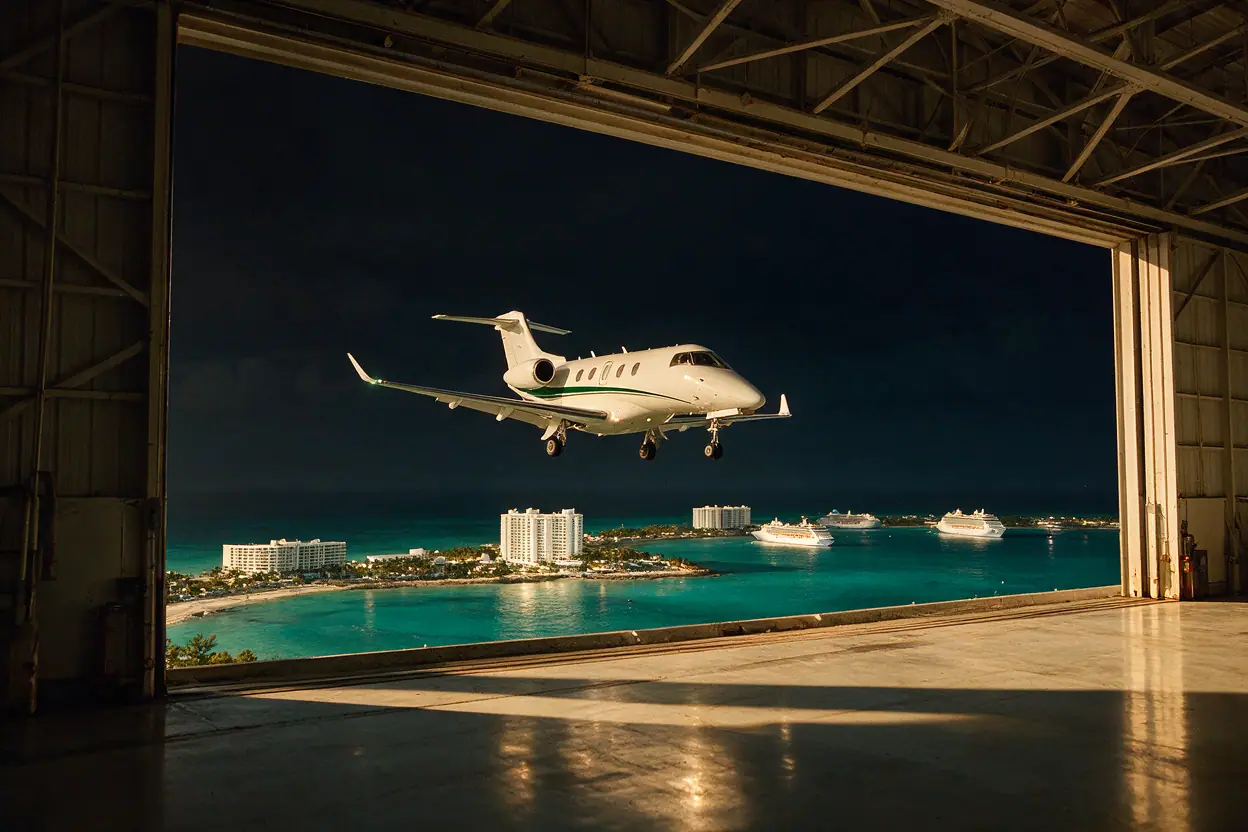
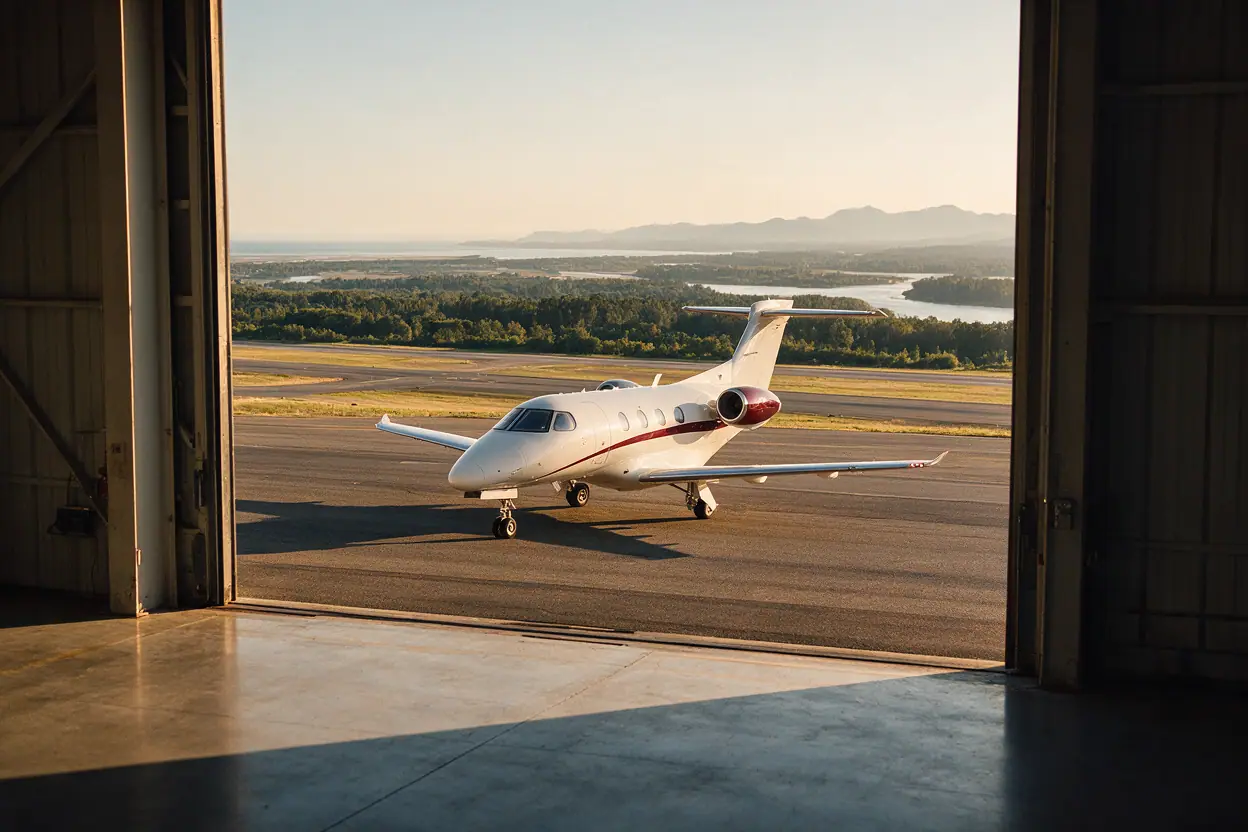
Turboprop trip times and pricing by route
A turboprop covers these 26 routes in 0h 35m to 8h 49m, with one-way estimates running $2,200 to $31,000.
| Trip | Duration | One-way est. |
|---|---|---|
| New York → Miami | 3h 37m | $8,000–$12,500 |
| New York → Los Angeles | 8h 30m + stop | $18,500–$30,000 |
| Los Angeles → Las Vegas | 1h 00m | $2,200–$3,500 |
| New York → Palm Beach | 3h 27m | $7,500–$12,000 |
| Los Angeles → San Francisco | 1h 17m | $3,000–$4,500 |
| New York → Aspen | 6h 19m + stop | $14,000–$22,000 |
| Los Angeles → Aspen | 2h 31m | $5,500–$9,000 |
| New York → The Hamptons | 0h 35m | $2,200–$3,500 |
| Chicago → New York | 2h 28m | $5,500–$8,500 |
| Dallas → Houston | 1h 02m | $2,500–$3,500 |
| Miami → Nassau | 0h 52m | $2,200–$3,500 |
| New York → Boston | 0h 51m | $2,200–$3,500 |
| Washington, DC → New York | 0h 59m | $2,200–$3,500 |
| Los Angeles → Cabo San Lucas | 3h 08m | $7,000–$11,000 |
| Dallas → Las Vegas | 3h 32m | $8,000–$12,500 |
| Chicago → Miami | 3h 53m | $8,500–$13,500 |
| Atlanta → New York | 2h 33m | $5,500–$9,000 |
| New York → Las Vegas | 7h 49m + stop | $17,000–$27,500 |
| San Francisco → Las Vegas | 1h 33m | $3,500–$5,500 |
| Denver → Aspen | 0h 38m | $2,200–$3,500 |
| Houston → New York | 5h 22m + stop | $12,000–$19,000 |
| Dallas → New York | 4h 28m | $10,000–$15,500 |
| Los Angeles → Honolulu | 8h 49m + stop | $19,500–$31,000 |
| Seattle → Los Angeles | 3h 10m | $7,000–$11,000 |
| Phoenix → Los Angeles | 1h 25m | $3,000–$5,000 |
| Boston → Palm Beach | 3h 57m | $8,500–$14,000 |
Good to know
What does a turboprop for charter cost per hour?
Expect $2,200 to $3,500 per hour for a turboprop for charter in the US, depending on the aircraft, the market, and the day of the week. The King Air 350i and PC-12 NGX both sit inside that band. Quotes are estimates and do not include landing fees, de-icing, or crew overnight, which are typically passed through at cost. Ask for an all-in number before you compare two quotes side by side.
How fast does a turboprop for charter fly?
About 300 knots true airspeed is typical for the class. The King Air 350i cruises at 312 knots and the PC-12 NGX at 290 knots. That is fast enough that New York to Miami at 949 nm takes about 3 hours 37 minutes nonstop. Compare that to a light jet at 430 knots and you can see where the time penalty starts to matter on longer legs.
How many passengers fit on a turboprop for charter?
Most US turboprops in charter seat six to eight passengers. The King Air 350i seats eight and the PC-12 NGX seats six. Baggage space is the real constraint on a full load: 55 cubic feet on the King Air and 40 on the PC-12. If your group is eight with a lot of luggage, confirm the baggage bay volume and weight limit with the operator before booking.
Which routes work best for a turboprop for charter?
Anything under about 700 nautical miles is a good fit. Los Angeles to Las Vegas at 199 nm, Los Angeles to San Francisco at 279 nm, and New York to the Hamptons at 82 nm are all short hops where the turboprop wins on price. Mid-range legs like New York to Palm Beach at 902 nm and Los Angeles to Aspen at 634 nm also work nonstop. Beyond that, the time penalty grows.
Can a turboprop for charter land at smaller airports than a jet?
Yes, generally. A turboprop needs less runway than a jet, which opens up regional airports, island strips, and mountain towns that jets cannot serve without a diversion. That is one of the main reasons a turboprop for charter is the first quote for a rural business trip or a weekend at a smaller destination airport. Confirm the runway length and surface with the operator for your specific field.
What should I ask before I book a turboprop for charter?
Ask what the hourly rate covers and what gets billed separately, especially de-icing, landing fees, and crew overnight, and confirm the aircraft's range against your route with a realistic fuel stop factored in. Quotes are estimates until you have the written contract.