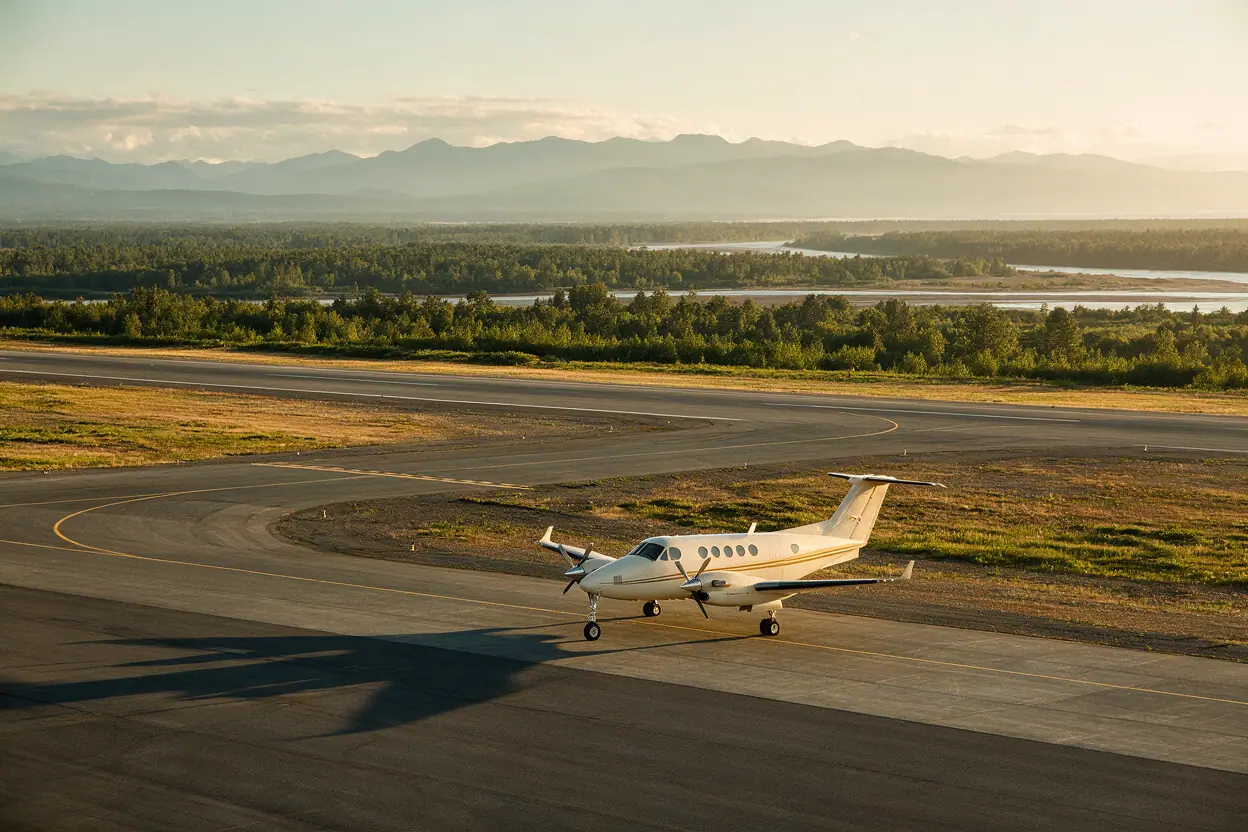
Jet charter San Francisco to Las Vegas
This page covers jet charter San Francisco to Las Vegas. The trip runs 359 nautical miles, with turboprops and jets taking about 1 hour 6 minutes to 1 hour 33 minutes. Use it to compare aircraft classes, airports, pricing and timing for the 413-mile hop.
- 359 nm413 sm
- 1h 33mhours in turboprop
- $3,500–$5,500one-way estimate
San Francisco to Las Vegas aircraft pricing
A turboprop from San Francisco to Las Vegas covers 359 nautical miles in 1h 33m, with a one-way estimate of $3,500–$5,500.The table below lays out every class that works on this regional leg, with nonstop times and estimated one-way prices. All figures are estimates and vary with date, demand, aircraft availability and crew. Use them to see how much the step up from turboprop to light jet, or light to midsize, actually costs on this 359 nm route.
| Class | Duration | One-way est. | Remarks |
|---|---|---|---|
| Turboprop | 1h 33m | $3,500–$5,500 | Best fit |
| Light jet | 1h 11m | $4,500–$7,000 | Nonstop |
| Midsize jet | 1h 09m | $6,000–$9,000 | Nonstop |
| Super-midsize jet | 1h 06m | $8,000–$11,000 | Nonstop |
| Heavy jet | 1h 06m | $10,500–$16,000 | Nonstop |
Estimates cover the whole aircraft, not individual seats, and exclude federal excise tax and segment fees. Block time counts taxi, climb and descent.
Ticket prices vs charter, San Francisco to Las Vegas
The airline figures are the cheapest fares Google Flights listed for a single passenger on Dec 9, 2026 (looked up Nov 15, 2026); the charter figure is our estimate for the entire aircraft. For 8 travellers, first class cabin tickets come to roughly $1,792, versus $3,500–$5,500 for the whole turboprop.
| How you fly | Carrier | Duration | One-way est. | Each seat |
|---|---|---|---|---|
| Economy cabin | Frontier · nonstop | 1h 42m | $24 | $24 |
| First class cabin | United · nonstop | 1h 42m | $224 | $224 |
| Turboprop | Entire jet, seating up to 8 | 1h 33m | $3,500–$5,500 | $440–$690 |
Airline ticket prices move daily and don't cover bags over the fare allowance; the charter per-seat number assumes a full cabin.
How a turboprop handles this route
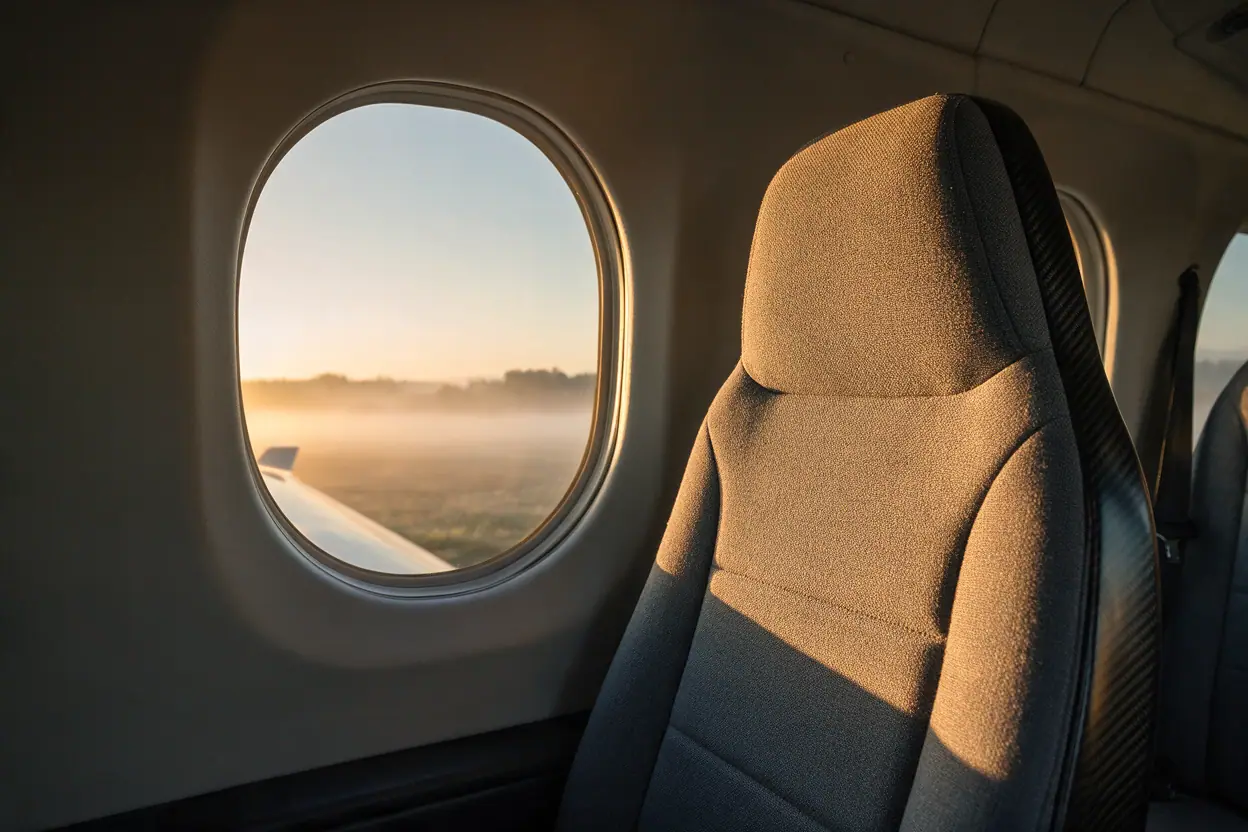
On a 359 nm leg, the turboprop is the practical choice: a Beechcraft King Air 350i or Pilatus PC-12 NGX covers the distance nonstop with no penalty for runway length. The cabin is smaller and slower than a jet, but for a flight this short the difference is measured in minutes, not hours. If you are carrying more than six passengers or a lot of luggage, then a light or midsize jet makes more sense.
Light jets bring more speed and a bit more cabin room, and they still fit the mission easily. The jump to midsize adds stand-up headroom and baggage capacity, which matters if you are heading to Las Vegas for a convention or a golf trip with clubs and cases. Heavy and super-midsize jets are available, but on this distance you are paying mostly for cabin size and ramp presence, not for time saved.
Beechcraft King Air 350i
- 8 pax
- 312 kt cruise
- 1,800 nm legs
Seats 4 ft 9 in tall, 16 ft 8 in long. Bags 55 cu ft.
Pilatus PC-12 NGX
- 6 pax
- 290 kt cruise
- 1,800 nm legs
Seats 4 ft 10 in tall, 16 ft 11 in long. Bags 40 cu ft.
Timing your jet charter San Francisco
Demand on this route peaks around major Las Vegas events, holiday weekends and the winter convention season. Prices track that demand, so the same aircraft can quote higher on a busy Friday than on a Tuesday. If you are traveling for a specific event, then book as soon as your dates are fixed; the turboprop and light jet categories fill first because they are the most economical. For a same-day round trip, you will often pay for the aircraft to wait or to reposition, so a quick turn is worth discussing with your provider before you commit.
For a trip this short, the aircraft is usually back in the Bay Area the same day, which keeps costs down. If you need a flexible return time, then ask for a quote that includes a wait or a return-leg option rather than assuming the aircraft will be available. In summer, Las Vegas heat is a factor for ramp conditions and passenger comfort, but it rarely changes the flight time on this route. The main scheduling risk is event-driven demand, not weather.
Departing from San Francisco
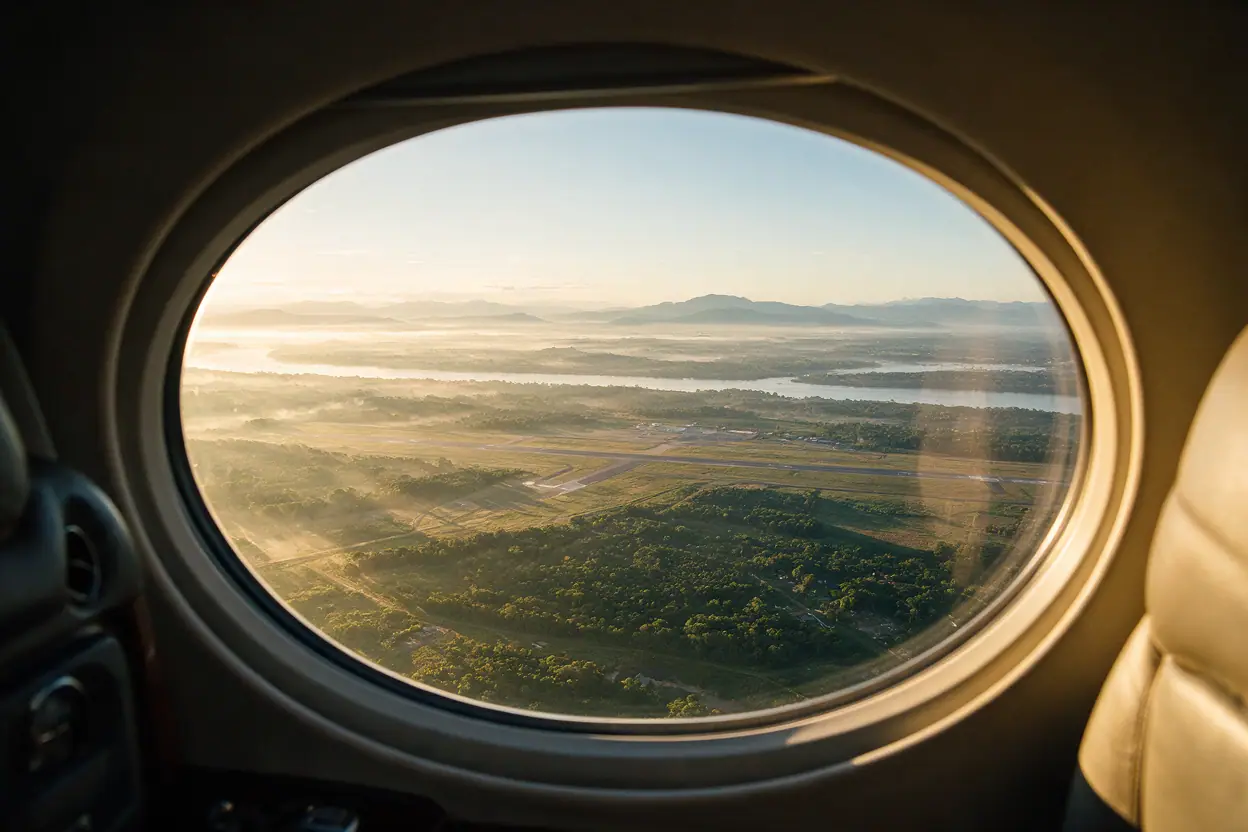
San Francisco International (KSFO) and Oakland San Francisco Bay (KOAK) are the two departure points for this route. KSFO has an 11,870 ft runway and KOAK a 10,520 ft runway, so every class in the table can operate comfortably. Most charter passengers use a private terminal or FBO, which means you can arrive closer to departure than at the commercial terminal. If you are connecting from a commercial flight, then allow time for the terminal transfer.
Bay Area weather can affect departure more than arrival. Morning fog at SFO is a known factor, and it can push back your slot even on a clear day at Oakland. If your trip is time-critical, then a departure from Oakland can be the better bet when the marine layer is in. Either way, your quote should state the departure airport clearly so there is no last-minute change.
Arriving in Las Vegas
On the Las Vegas end, Harry Reid International (KLAS) is the main airport, with a 14,835 ft runway and full services. Henderson Executive (KHND) sits southeast of the Strip with a 6,501 ft runway, which is plenty for the turboprops and light jets on this route. If your destination is Henderson, Lake Mead or the Boulder City area, then KHND can cut your drive significantly compared with KLAS.
KLAS is the busier of the two and closer to the Strip and the convention center. For a weekend or a show, the drive from either airport is manageable. If you are heading to a golf resort or a meeting in the suburbs, then check which airport your ground transport is pricing before you book. Both airports handle private charters, and the choice usually comes down to where you are staying.
| Field | ID | Rwy |
|---|---|---|
| Harry Reid International Airport | KLAS / LAS | 14,835 ft |
| Henderson Executive Airport | KHND / HSH | 6,501 ft |
| San Francisco International Airport | KSFO / SFO | 11,870 ft |
| Oakland San Francisco Bay Airport | KOAK / OAK | 10,520 ft |
Other San Francisco–Las Vegas routes like this
These 6 private jet routes cover 161 to 321 nautical miles, with one-way turboprop estimates running $2,200 to $5,000.
Q&A for this route
How much does jet charter San Francisco to Las Vegas cost?
Estimates for this 359 nm route start at $3,500 to $5,500 for a turboprop and run to $10,500 to $16,000 for a heavy jet. Light jets fall around $4,500 to $7,000, midsize $6,000 to $9,000 and super-midsize $8,000 to $11,000. These are one-way estimates and move with date, demand and aircraft availability.
How long is the flight from San Francisco to Las Vegas by private jet?
Nonstop time runs about 1 hour 6 minutes in a super-midsize or heavy jet and 1 hour 33 minutes in a turboprop, with light and midsize jets in between at roughly 1 hour 9 to 11 minutes. The 359 nm distance is short enough that all classes in the table fly it nonstop, so the choice is mostly about cabin and cost.
Which Las Vegas airport do private jets use from San Francisco?
Harry Reid International (KLAS) is the primary arrival point, with a 14,835 ft runway and close access to the Strip. Henderson Executive (KHND) is the alternate, with a 6,501 ft runway that suits turboprops and light jets. If your destination is Henderson or Lake Mead, then KHND can save you drive time.
Can I do a same-day round trip on this route?
Yes, the distance supports a same-day return, but the quote depends on how long the aircraft waits in Las Vegas. A turboprop or light jet can turn quickly, and the total time in the air is short. If your ground time is more than a couple of hours, then expect the price to reflect a wait or a return-leg arrangement rather than a simple one-way.
What aircraft are available for charter from San Francisco to Las Vegas?
The turboprop category includes the Beechcraft King Air 350i and Pilatus PC-12 NGX, both with ranges over 1,800 nm, so this 359 nm leg is well within limits. Light, midsize, super-midsize and heavy jets are also quoted on the route. The right choice depends on passenger count, luggage and whether you want a stand-up cabin.
When should I book a private flight from San Francisco to Las Vegas?
For event weekends and holiday periods, earlier is better because the economical turboprop and light jet categories are the first to sell out. On ordinary weekdays, a short lead time is often workable. If your plans are fixed, then locking in the aircraft early gives you a better chance at the class and price you want.