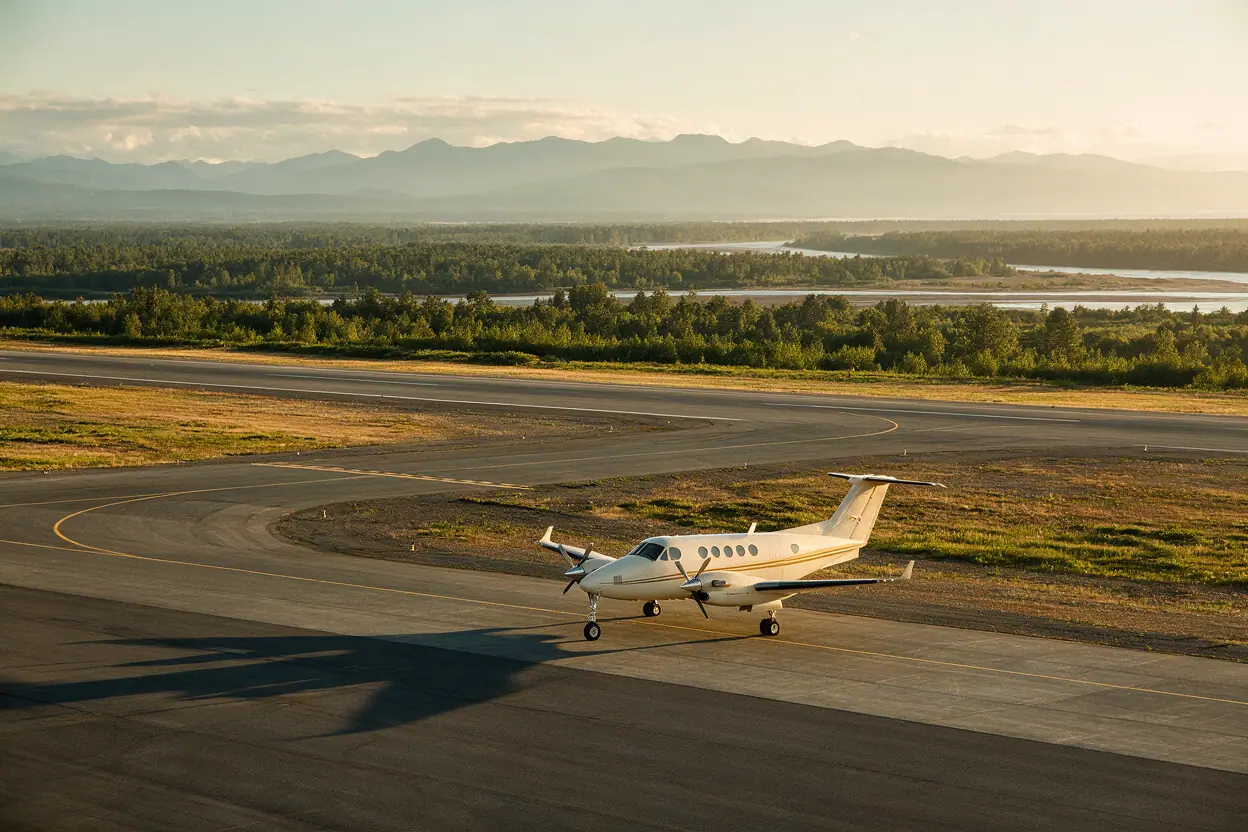
Private Jet Denver to Aspen
Private jet Denver to Aspen covers 96 nautical miles. A light jet makes the trip in roughly 32 minutes gate to gate. This guide covers runway limits, typical quotes, and the timing that matters.
- 96 nm110 sm
- 0h 38mhours in turboprop
- $2,200–$3,500one-way estimate
Denver to Aspen aircraft pricing
A turboprop from Denver to Aspen covers 96 nautical miles in 0h 38m, with a one-way estimate of $2,200–$3,500.The chart below shows each class that flies this route nonstop, with block time and an estimated one-way charter range. Prices are estimates for the aircraft and crew, not per seat, and they move with demand around holidays and ski season. Use the ranges to compare cabins, not as a firm quote.
| Class | Duration | One-way est. | Remarks |
|---|---|---|---|
| Turboprop | 0h 38m | $2,200–$3,500 | Best fit |
| Light jet | 0h 32m | $4,000–$6,000 | Nonstop |
| Midsize jet | 0h 32m | $5,200–$8,000 | Nonstop |
| Super-midsize jet | 0h 31m | $7,200–$10,000 | Nonstop |
| Heavy jet | 0h 31m | $9,500–$14,500 | Nonstop |
Estimates cover the whole aircraft, not individual seats, and exclude federal excise tax and segment fees. Block time counts taxi, climb and descent.
Ticket prices vs charter, Denver to Aspen
The airline figures are the cheapest fares Google Flights listed for a single passenger on Dec 9, 2026 (looked up Nov 15, 2026); the charter figure is our estimate for the entire aircraft. For 8 travellers, first class cabin tickets come to roughly $3,552, versus $2,200–$3,500 for the whole turboprop.
| How you fly | Carrier | Duration | One-way est. | Each seat |
|---|---|---|---|---|
| Economy cabin | United · nonstop | 1h 02m | $344 | $344 |
| First class cabin | United · nonstop | 1h 02m | $444 | $444 |
| Turboprop | Entire jet, seating up to 8 | 0h 38m | $2,200–$3,500 | $280–$440 |
Airline ticket prices move daily and don't cover bags over the fare allowance; the charter per-seat number assumes a full cabin.
How a turboprop handles this route
The turboprop is the pick here, and it is not close. On a 96 nautical mile leg a Beechcraft King Air 350i or Pilatus PC-12 NGX spends almost no time at cruise altitude, so the speed advantage of a jet buys you a minute or two at best, while the turboprop burns far less fuel and often lands at a lower quote. Either aircraft seats six to eight and carries ski bags in a 40 to 55 cubic foot hold, which matters on this route.
The light and midsize jets fly the same 32 minutes for more money, and the super-midsize and heavy classes shave only a minute off that. Choose a jet if you want a cabin you can stand in or a quieter ride, not because it gets you to Aspen faster. On a hop this short, the aircraft that fits the runway and the bag count is the one to book.
Beechcraft King Air 350i
- 8 pax
- 312 kt cruise
- 1,800 nm legs
Seats 4 ft 9 in tall, 16 ft 8 in long. Bags 55 cu ft.
Pilatus PC-12 NGX
- 6 pax
- 290 kt cruise
- 1,800 nm legs
Seats 4 ft 10 in tall, 16 ft 11 in long. Bags 40 cu ft.
When Denver to Aspen demand peaks
Demand on this route tracks the ski calendar. Christmas through New Year, Presidents' Day weekend and the X Games window fill aircraft early, and quotes climb with the calendar. Summer brings music festival and hiking traffic, which is busy but less extreme.
Booking a private jet Denver to Aspen for a holiday week is best done as early as your plans allow, because the turboprops go first. Midweek departures and early-morning slots are easier to find and cheaper than Friday afternoons. For a same-day return, keep the aircraft on the ground with you rather than releasing it, since a repositioning leg back to Denver costs more than waiting.

Leaving Denver
Charter departures around Denver usually go from Centennial Airport (KAPA), whose 10,001 foot runway handles everything in the fleet, or from Denver International (KDEN), with a 16,000 foot runway and more slot pressure. Neither is a commercial terminal experience for you; your crew meets you at the FBO and you board when you are ready.
Flying from Centennial Airport saves the airline terminal walk entirely and puts you in the air sooner. Winter mornings can bring deicing before departure, and that adds time to the schedule, so build it into the plan for a ski-season trip.
Arriving at Aspen-Pitkin County
Aspen-Pitkin County Airport (Sardy Field, KASE) sits at 8,006 feet with a single 8,006 foot runway, and the field closes to most traffic at night, so arrival times get set around its operating window rather than around your meeting. The airport is a short ride from town and from the Snowmass and Highlands bases.
The mountain terrain and high elevation at Aspen mean crews who fly this route regularly are worth asking for by name. Summer heat raises density altitude and can trim payload, so a full cabin with heavy bags in July may need a different aircraft than the same group in February.
| Field | ID | Rwy |
|---|---|---|
| Aspen-Pitkin County Airport (Sardy Field) | KASE / ASE | 8,006 ft |
| Centennial Airport | KAPA / APA | 10,001 ft |
| Denver International Airport | KDEN / DEN | 16,000 ft |
Other Denver–Aspen routes like this
These 6 private jet routes cover 82 to 208 nautical miles, with one-way turboprop estimates running $2,200 to $3,500.
Q&A for this route
How long is a private jet Denver to Aspen flight?
A light jet flies the 96 nautical mile route in about 32 minutes, and a turboprop takes roughly 38 minutes. That is block time, so add taxi at both ends. Compare that to the drive, which runs several hours on I-70 in good weather and far longer when the tunnel backs up or a winter storm closes the pass.
What does a private jet Denver to Aspen cost?
Estimated one-way charter ranges run from about $2,200 to $3,500 for a turboprop and $4,000 to $6,000 for a light jet, with midsize at $5,200 to $8,000 and the larger cabins above that. These are estimates, and a holiday week can push a quote well above the range while a midweek slot can sit at the bottom.
Can a jet land at Aspen-Pitkin County Airport?
Yes, but the field sits at 8,006 feet with one 8,006 foot runway and night restrictions, so it is not open to every aircraft on every schedule. Crews need specific training and the right performance margins. If your aircraft or time slot does not fit, the alternative is usually Eagle or Rifle with a drive, so ask before you book.
Which aircraft class is best for Denver to Aspen?
The turboprop is the best fit at 96 nautical miles. A King Air 350i or PC-12 NGX covers the route in about 38 minutes, seats six to eight, and costs less to run than a jet that saves a minute or two. Choose a light or midsize jet if cabin height and quiet matter more to you than the price difference.
Is a same-day round trip from Denver to Aspen practical?
Yes. The flight is short enough that a morning out and an afternoon back leaves a full day in Aspen. Keep the aircraft with you rather than sending it home, because a repositioning leg costs more than a few hours of waiting. Confirm Aspen's operating hours for the return before you set the schedule.
What changes the price on a Denver to Aspen charter quote?
Aircraft class, day of week and season drive most of it. Holiday weeks and the ski weekends sit at the top of the range, and a turboprop on a Tuesday can sit near the bottom. Deicing, ground time for a same-day return, and any repositioning also show up in the estimate.