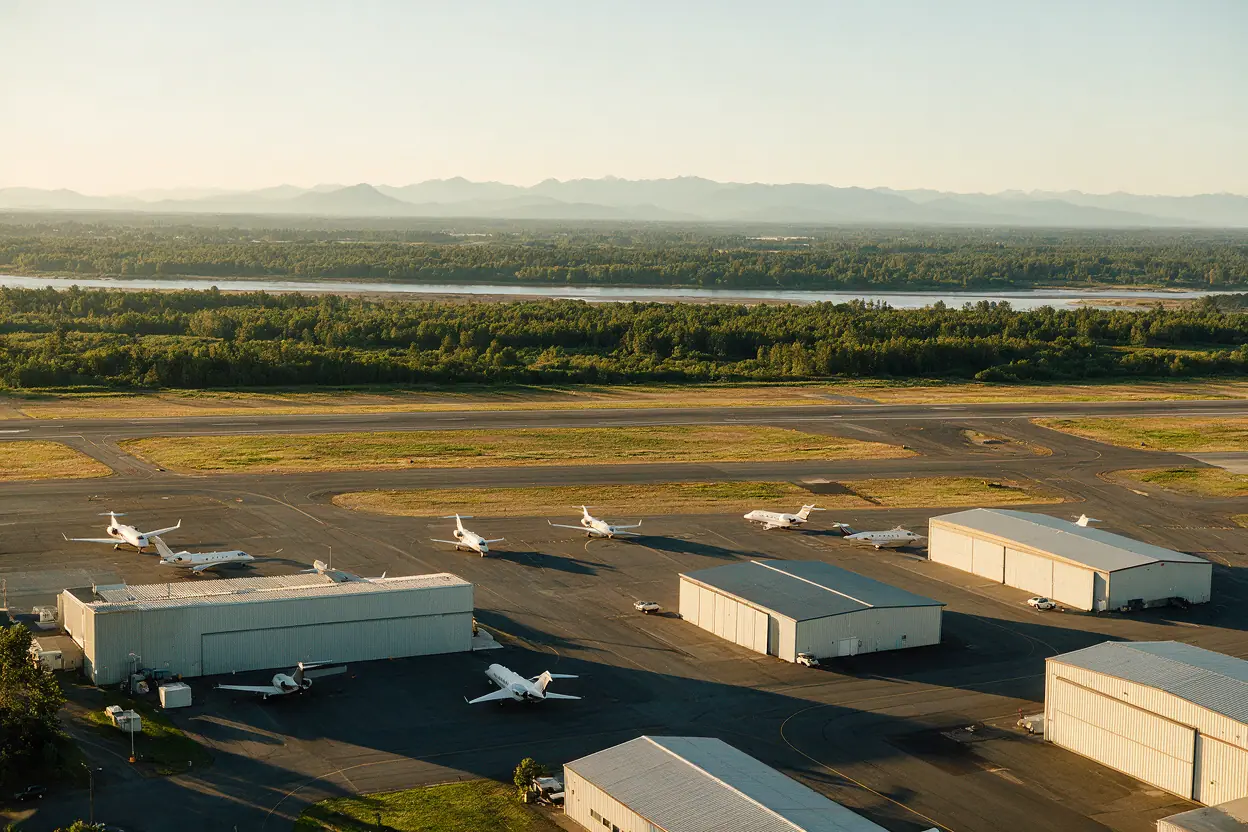
Private jet charter Tampa charter
Private jet charter Tampa charter flights use Tampa International and its two FBOs. The field has an 11,002-foot runway at 26 feet elevation. Summer density altitude there peaks near 2,600 feet.
- KTPA · TPAfield codes
- 26 ftfield height
- 11,002 ftlongest runway
- 0 mito New York
A private jet charter Tampa charter booking into Tampa International (KTPA) puts you on the Gulf Coast's main commercial field, where charter traffic shares the airport with the airlines but uses its own general aviation side. Two FBOs, Sheltair and Signature Aviation, handle charter arrivals and departures at TPA. The taxi route to those ramps is separate from the main terminal, so charter flights stay clear of airline congestion.
From a pilot's seat, TPA is an easy airport to plan into. The longest runway is 11,002 feet, enough for any jet likely to be chartered here, including large-cabin aircraft on long legs. Field elevation is 26 feet, so the density altitude stays modest even on a hot July afternoon. That combination of runway length and low elevation makes TPA a reliable year-round destination for jets of all sizes.
For a traveler comparing quotes, the airport itself rarely limits which aircraft can serve the trip. What changes is the ground experience: which FBO your flight uses, how far the drive is to your final destination, and whether the trip is point-to-point or includes multiple stops. A private jet charter Tampa charter quote should list the aircraft type, the FBO, and the estimated flight time so you can compare offers line by line. Prices are estimates until an operator confirms aircraft availability.
Ground handling at Tampa
Two FBOs serve general aviation at Tampa International: Sheltair and Signature Aviation, both offering ramp access, lounges, and ground transportation coordination. Choosing between Sheltair and Signature Aviation usually comes down to which one your operator has a handling arrangement with, so ask before you book. If your itinerary includes a same-day return, then the FBO can often stage the aircraft and crew for a quick turn, but confirm that with the operator when you request the quote. For international arrivals, CBP processing is arranged through the FBO, so build that into your timeline.
Best for
- Business travelers flying into Tampa for meetings downtown or in the Westshore district, where the FBO drive is short.
- Vacation groups heading to Clearwater, St. Pete Beach, or the Gulf Coast, with luggage and golf clubs that are easier on a charter than on a scheduled flight.
- College sports weekends and family visits to the University of South Florida or downtown Tampa events.
- Medical travel and time-sensitive trips where the 11,002-foot runway and two FBOs give flexibility for larger aircraft.
| Class | Runway needed | Local |
|---|---|---|
| Turboprop | 3,300 ft+ | Within limits |
| Light jet | 4,000 ft+ | Within limits |
| Midsize jet | 5,000 ft+ | Within limits |
| Super-midsize jet | 5,200 ft+ | Within limits |
| Heavy jet | 5,600 ft+ | Within limits |
Access and ground transportation at TPA
The FBOs at TPA connect to the terminal area and to the Veterans Expressway and I-275, so downtown Tampa is typically a short drive. Ground transportation from the FBO can be arranged in advance, and having a car waiting matters more during major events when rideshare demand spikes. If your trip falls during the Gasparilla parade or a Buccaneers home game, then plan extra time for the drive and book the car with your charter quote.
Routes passing Tampa
These 6 private jet routes cover 199 to 2,129 nautical miles, with one-way light jet estimates running $4,000 to $36,000.


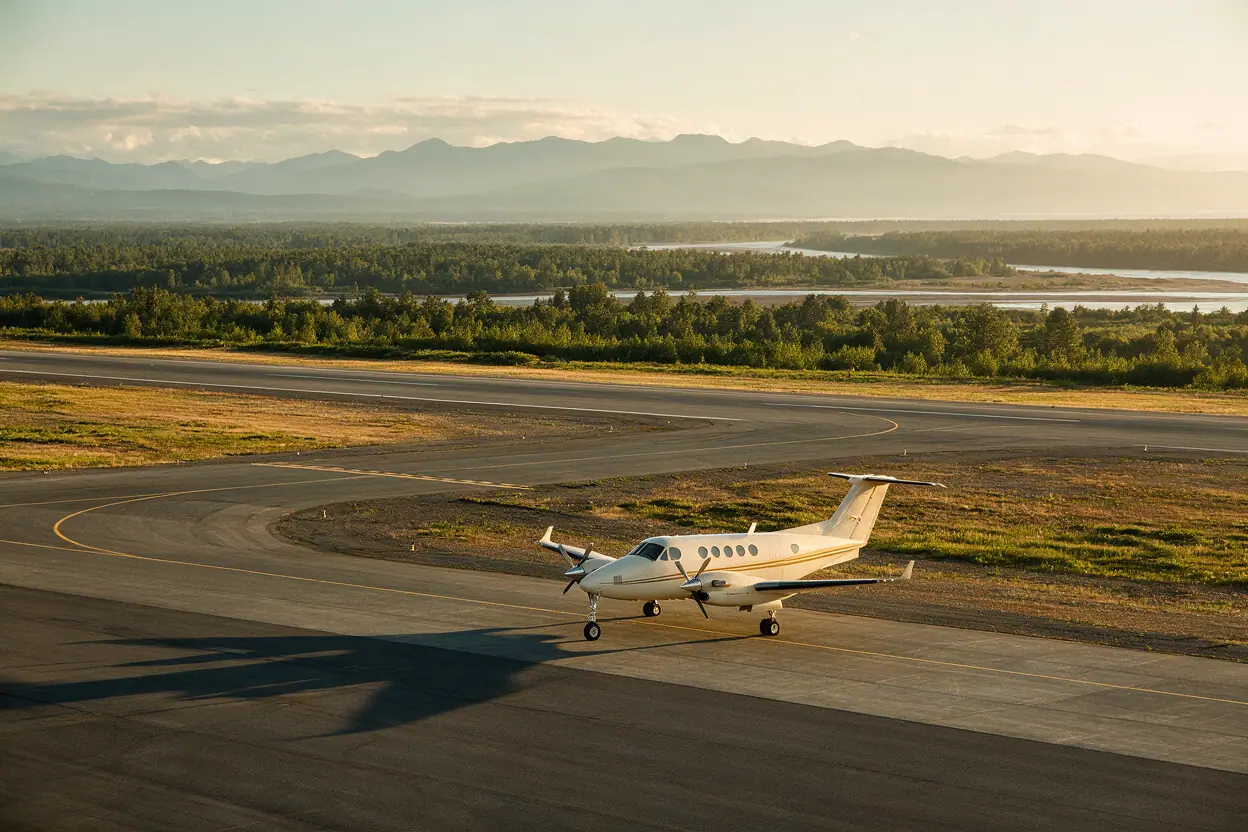


Heat and density altitude at TPA
Tampa's summer heat is the main seasonal factor for charter performance, though the airport's low elevation keeps density altitude modest. Average highs run from 70 F in January to 89 F in July and August. July density altitude at TPA is around 2,000 feet, low enough that most charter jets take off without payload or fuel penalties. Wet days peak in August at 25, so afternoon thunderstorms are a planning consideration from June through September. If you are flying in the wet season, then earlier morning departures often avoid the worst of the convective buildup.
| Time of year | Mean max | Days of rain | Density alt |
|---|---|---|---|
| Jan | 70°F | 7 | 800 ft |
| Feb | 74°F | 8 | 1,000 ft |
| Mar | 80°F | 8 | 1,400 ft |
| Apr | 83°F | 9 | 1,600 ft |
| May | 88°F | 11 | 2,000 ft |
| Jun | 88°F | 21 | 2,000 ft |
| Jul | 89°F | 24 | 2,000 ft |
| Aug | 89°F | 25 | 2,000 ft |
| Sep | 86°F | 21 | 1,800 ft |
| Oct | 83°F | 8 | 1,600 ft |
| Nov | 77°F | 7 | 1,200 ft |
| Dec | 72°F | 6 | 900 ft |
Runways and performance at Tampa
Tampa International has a longest runway of 11,002 feet, and the field elevation is 26 feet, so takeoff and landing distances are rarely a constraint for charter jets. The 11,002-foot runway gives large-cabin jets plenty of margin even on the hottest days, which is why the field handles long-range charter legs without a fuel stop. Peak density altitude is about 2,600 feet in the hottest month, and July runs near 2,000 feet; neither number forces a payload restriction on typical charter aircraft. If your trip is in a light jet on a warm afternoon, then the operator will still run performance numbers, but the airport is not the limiting factor.
| Rwy | Length | Width | Surface |
|---|---|---|---|
| 19R/01L | 11,002 ft | 150 ft | Concrete |
| 19L/01R | 8,300 ft | 150 ft | PEM |
| 10/28 | 6,999 ft | 150 ft | PEM |
Q&A for this airport
What is the longest runway at Tampa International for private jet charter Tampa charter flights?
The longest runway at TPA is 11,002 feet, and the field elevation is 26 feet. That length is enough for large-cabin jets on long-range legs, and it means the airport is rarely a performance constraint for charter aircraft. Even in the hottest month, peak density altitude is about 2,600 feet, so most jets depart with full payload.
Which FBOs serve private jets at TPA?
Sheltair and Signature Aviation are the two FBOs at Tampa International. Both handle charter arrivals and departures, and your operator will confirm which one they use. If you need a specific FBO for ground transportation or a quick turn, then ask when you request the quote so the handling can be arranged in advance.
How hot does it get at TPA and how does that affect density altitude?
Average highs reach 89 F in July and August, and the peak density altitude is about 2,600 feet. The July density altitude is around 2,000 feet. Those numbers are well within normal limits for charter jets, so heat rarely forces a payload restriction at TPA. Afternoon thunderstorms in summer are a more common reason for a schedule adjustment.
Can I book a private jet charter Tampa charter flight for a large group?
Yes. TPA's 11,002-foot runway and two FBOs can accommodate larger aircraft, including those with more cabin space for groups. The operator will match the aircraft to your passenger count and luggage. Because TPA is a commercial airport, your charter will use the general aviation FBOs rather than the airline terminal, which keeps the group together.
What is the peak density altitude at Tampa International and when does it occur?
Peak density altitude at TPA is about 2,600 feet, based on the hottest month's average high plus 8 F. It occurs in the summer, with July around 2,000 feet. For charter planning, that means the field is not a limiting factor for most jets, even on the warmest afternoons. Winter density altitude drops to about 800 feet in January.
How do I compare private jet charter Tampa charter quotes?
Ask each provider for the aircraft type, the FBO at TPA, the estimated flight time, and what the quote includes, such as crew, fuel, and landing fees. Prices are estimates until an operator confirms availability. If your trip is international, then confirm CBP arrangements. Comparing those line items side by side is the practical way to see the real difference between offers.